Drive dot LED matrix display using LPT port and driver IC
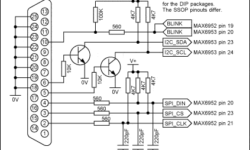
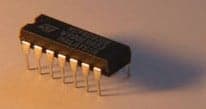
It is convenient to drive dot LED matrix displays using IC drivers of 5×7 dot LED matrices like MAX6952 and MAX6953. These two IC’s differ only by data interfaces: SPI for MAX6952 and I2C for MAX6953. In this article, you will see how these driver IC’s can be controlled by a computer using an LPT port. The program provided here works with almost all Windows versions: 95, 98, 98SE, ME, NT, 2000, and XP. The printer ports that can be used are LPT1 and LPT2. The program is called MAX6952, and it is programmed by using Visual Basic 5. To start this program, you will need a few standard VB run time libraries: MSVBVM50.DLL. The program uses a freeware driver of parallel port: DriverLINXTDLPortIO.DLL, responsible for hardware I/O in win32.dll and is not accessible by standard VB. Windows NT and Windows 2000/XP require drivers too. It is DLPortIO.SYS. Both drivers are owned by Scientific Software Tools, Inc. DriverLINXT is a registered trademark of Scientific Software Tools, Inc. First of all, installation on win98. Download file MAX6952-95.exe (793kB). This is a self-extracting archive that contains ReadMe.txt, ReadMeSST.txt, MAX6952.EXE, DLPortIO.DLL, and MSVBVM50.DLL. By default install directory is C: MAX6952. File MSVBVM50.DLL can…
Continue reading

Endoscopy inspection in electronics-detect BGA defects

Endoscopy is known to be used in medicine, but it can also be used in other areas of industry like electronics. In big electronic industries where investments are huge, the requirements for quality are also big. In big industries, there is automatic testing using. This allows achieving maximum quality with minimal cost. In smaller industries, there is a requirement to inspect almost every product to avoid faults. One of the biggest problems that may occur is soldering errors, position errors, or other defects. For visual defect identification, endoscopy is often used. Endoscopy in electronics is some AOI (Automatic Optical Inspection), often used to check BGA pins. The endoscope usually consists of a light source directed by fibber glass and an optical sensor with variable focus. Changing focal length, it is possible to view about 50mm area while space between chip and board can be only 0.05mm. Information from the optical sensor can be sent to a computer for further processing. Comparing to the X-RAY method, optical inspection of electronic devices is cheaper.

Continue reading

Celsius converter to digital code from remote sensor

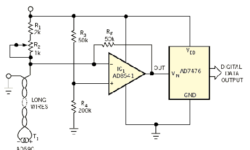
This circuit is originally published by Elana Lian and Chan Tran (Analog Devices). This simple single supply system enables to measure remote temperature with less than 1°C error in a range of 0 to 100°C: The circuit consists of the following parts: T1- low-cost AD590 temperature sensor; AD8541 – rail to rail amplifier; four resistors; potentiometer; and ADC AD7416. Use precision resistor RF for amplifier feedback to minimize scale factor.

Continue reading

Few words about SMD-Surface Mount components

Today electronics is shifting to SMT (Surface Mount Technology) or SMD (Surface Mount Devices) area. DIP domination has left behind. They won’t vanish from the electronics industries as they are many areas and will be successfully used. But as electronic circuit complexity grows, demand for PCB miniaturization increases, there is no other way to use SMD technology to achieve these goals. Electronic hobbyists noticed that it is harder to find some particular electronic elements in DIP-packages. Many microcontroller types are released only in SMT packages like Atmega128– QFP64, LPC2000 microcontroller series in the LQFP package series. I don’t talk about bigger IC like AVR32 or FPGA, where BGA packages come with 672 connection balls.

Continue reading

Sensing Sound Wave with microcontroller

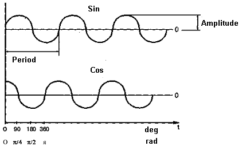
A sound wave can be sensed by using a sound sensor. If you are designing a robot, sometimes it is useful to enable sensing of sound. Then you can program your robot to follow your voice commands. In some cases, sound wave sensors are used as collision sensors. A sound wave sensor is a microphone. The microphone is a device that converts sound pressure into electric signals. Let’s see how sound waves can be sensed. As we already know, the sound is a complex signal which consists of multiple different frequency waves. One sound wave can be represented as sin or cos signal: When many of such waves are summed (s called harmonics), we can represent any analog signal- any shape and any frequency.

Continue reading

Prototype board types

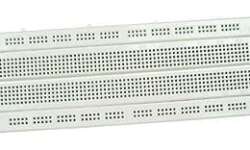
If you are starting to take an interest in electronics, this is a good thing to know what type of prototyping boards can be used. There can be four types of prototype boards: Solderless breadboard- where connections are made by using jumpers;

Continue reading

USB powered power amplifier for your PC

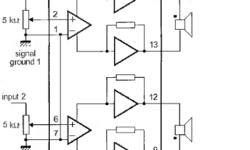
I faced this article when I was looking for a simple solution to increase the output of my PC’s integrated sound card. The sound level of it decreased, so I can’t normally listen to my headphones. So this article is about how to increase your PC sound card’s power by using a minimal amount of parts and a USB power supply. This might be a good solution for all of those who have a PC with an integrated sound card into the motherboard. The main problem is that the outputs of such sound cards are for active acoustic systems; this means that speakers must have a power amplifier built-in. If you decide to connect headphones sometimes, it might not be enough to provide the required sound level. If you are an electronics amateur, you can solve this very easily. You may build your simple power amplifier by using well known Philips operational amplifiers. Let’s say we use the TDA7053 amplifier. The TDA7053 is an integrated class-B stereo power amplifier in a 16-lead dual-in-line (DIL) plastic package, which requires a minimal amount of external parts. This is a straightforward solution for easy, quick, and quality design. One of the board solutions…

Continue reading

Radio Frequency Identification RFID

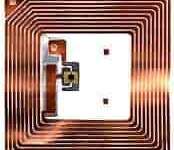
There are two types of RFID devices: Active and Passive. Active devices have a power source built-in, which supplies the transmitter. The transmitter is triggered by sending the signal to an RFID device. These devices have their own code and can transmit signals in desired time intervals. Active RFID devices are good in defining locations of objects or sending some information about a particular place (RFID-based location determination). Active RFID devices use high frequencies (455MHz, 2,45GHz, or 5,8GHz) – working range about 20 – 100 meters. The most common are passive RFID. They don’t need a power source. Passive RFID devices are low frequency(124 – 135kHz – low) and high(13,56MHz – 960KHz – high; 2,45GHz – UHF). The working principle of low and high-frequency devices differ. Simultaneously, low-frequency readers generate a magnetic field that induces a current in the RFID device antenna. The chip inside the RFID device modifies this magnetic field, which is reread by the reader. The working distance of such a device is about 35cm.

Continue reading

What is surface mounting?

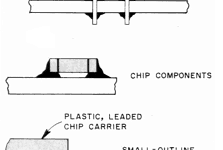
Simply talking surface mounting is a soldering technology where the component is soldered directly to a series of solder pads called a footprint. It is different soldering technology from through-hole, where component leads are inserted into holes of the board. The footprint is a series of pads that conform to the lead layout of packages of surface mount devices (SMD). Surface mounting has several advantages over through-hole technology. First of all the board become much smaller. So smaller boards and more dense placement of elements reduce costs. Because of higher placement density, traces between components becomes shorter. It lowers parasitic inductance and capacitance.

Continue reading

Shelling The Intel 8-bit Hex File Format

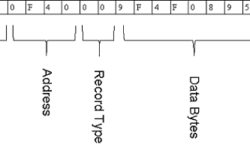
Intel 8-bit Hex File Format is the most common hex file format used globally, as far as I know. There is also Motorola Hex file format and maybe others. Creating applications with AVR-GCC, we usually select ihex output file format what means Intel hex file format. Let’s go through it and see what’s inside. It is simple as 6 and 6 (six and six) because each Hex file line consists of six parts. And there can be 6 record types in the hex file. Lets go through all six parts of each line:

Continue reading