How Much Can You Gain from Selling Your Car?

Selling your car can feel like a surprisingly big decision, especially if you’ve owned it for years. There’s the practical side, of course, but there’s often a little sentiment involved too. Perhaps it’s taken you on countless road trips, survived your daily commute, or simply been a reliable part of your routine. Still, when the time comes to move on, one question tends to outweigh the nostalgia: how much money could you actually walk away with? The answer isn’t always as straightforward as checking a price online. Getting the most from your vehicle involves understanding its value, choosing the right buyer, and knowing which expenses might eat into your final return.

Continue reading

The Role of AI Image Generators in Modern Digital Creativity

Making things for the screen hasn’t been the same since artificial intelligence turned up. Pictures now carry a fair bit of the load on websites, social feeds, lesson packs and online magazines, because a good one stops a scrolling thumb and makes a point land faster. Not so long ago, a small business needing a blog picture could pay a designer or use the stock photo of people grinning at a laptop that everyone had already seen. Original artwork meant talent and hours of hard graft, though that’s no longer the whole story. At its heart, an AI image generator reads a typed request and answers it with a picture, with machine learning doing the heavy lifting. A café owner can have a poster idea on screen before the coffee goes cold. It opens a door that once needed a design degree.

Continue reading

Beyond the Frame: How Virtual Reality Engineering is Redefining Human Potential

For the vast majority of computing history, humans have been spectators. We spend hours upon hours staring at screens. Whether it was a mainframe terminal in the 1970s or a smartphone in the 2020s, the relationship remained the same: we are here, and the digital world is over there. Virtual Reality (VR) shatters this paradigm. It destroys the screen and places the user inside the information. It is the transition from observation to embodiment. While the consumer market fixates on the “Metaverse” and gaming, a quiet revolution is taking place in the enterprise. Surgeons are practicing rare procedures on digital cadavers; pilots are logging flight hours in haptic cockpits; architects are walking through buildings that do not yet exist. This shift is not merely a visual trick; it is a psychological one. It leverages the brain’s neuroplasticity to create “presence”—the visceral feeling of truly being in a different place. However, achieving this illusion requires a mastery of physics, optics, and psychology that goes far beyond traditional software engineering. It is the domain of specialized virtual reality developers, the architects who are literally building new worlds.

Continue reading

Nano Banana 2.5 and the Evolution of AI Image Editing

Image editing isn’t what it used to be. Not even close. A few years back, editing a photo meant dealing with layers, masks, selections, color adjustments, and a dozen other controls most people never really figured out. Now? You can pretty much just say what you want changed. In plain words. And the AI takes it from there. Nano Banana 2.5 is one of the names people keep bringing up here. It’s an image-editing system built around AI-assisted visual manipulation. The big difference is how it looks at a picture. It doesn’t see a bunch of separate technical bits. It sees the whole scene, the context, and then responds to what you ask about objects, backgrounds, composition, lighting, or style. That’s a big deal for designers, content creators, marketers, educators, and honestly, just regular people too.

Continue reading

How AI Is Changing the Way People Edit Video

photostick_exstentions

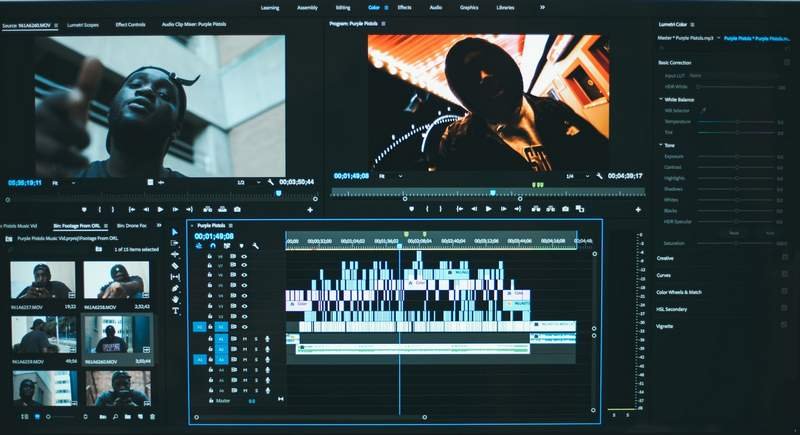
Video editing traditionally needed a mix of technical knowledge, creative judgment, and a genuinely serious chunk of time. Editors often have to review hours of footage, identify the useful scenes, arrange clips on a timeline, sync up audio, add captions, and adjust the final presentation for whatever platform it’s headed to. AI’s changing this process by helping creators handle some of these repetitive tasks through plain natural-language instructions instead. One of the genuinely more interesting developments here’s the rise of conversational video editing workflows. Instead of relying entirely on menus, buttons, and manual timeline adjustments, creators can just describe what they’re trying to achieve and let AI systems help organize the initial edit.

Continue reading

How Participation and Licensing Shape Access to Legal Sports Betting

More Americans now have direct access to regulated sports betting services, making account ownership a useful measure of how the market has developed. A 2026 Siena Research Institute and St. Bonaventure University survey found that 27% of Americans had an active online sportsbook account, up from 22% in 2025. Among men aged 18 to 49, the figure reached 52%, showing how established online sportsbook access has become within parts of the adult sports audience.

Continue reading

Building Smart Traffic Systems with Sensors, Gateways, and IoT Data

Smart traffic systems begin with a physical event. A vehicle crosses an inductive loop, disturbs a magnetic field, passes a camera, or triggers an environmental sensor. The sensor converts that event into a timestamped measurement. Firmware then creates useful information, such as “vehicle present,” a traffic count, or an estimated pollution level. An IoT gateway transfers this information to a central platform for monitoring and analysis. However, connected sensing alone does not reduce congestion. Improvement depends on the complete chain: measurement, transport, interpretation, command validation, field execution, and confirmation of the result.

Continue reading

Why Betway Online Sports Betting Apps Continue to Raise the Standard for Security and User Experience

Choosing a sports betting app is no longer only about markets and odds. Users also expect reliable security, smooth performance and privacy every time they log in. At the same time, many people are paying closer attention to sustainability in their everyday choices, from the products they buy to the services they support. This article looks at how secure betting platforms, strong cybersecurity practices, responsible technology and simple habits such as choosing eco-friendly products all contribute to a better overall experience.

Continue reading

From 32 to 48: How Streaming, Data and Betting Markets Meet at the 2026 World Cup

The expansion of the 2026 FIFA World Cup from 32 to 48 teams is a massive shift in technical scale. With 104 matches packed into 39 days across North America, the tournament has become an engineering marvel. For fans, this means more games, but for those of us watching the data, it represents a complete transformation in how we consume and interact with the sport. We are seeing a logistical intensity never before witnessed in international soccer. Because the matches are spread across such a vast geography, the sheer pressure on the broadcast and data infrastructure is unprecedented. It really forces every provider to optimize their performance, because if they falter, the entire global sports betting market for that specific match risks going offline or becoming wildly inaccurate.

Continue reading

Best Audio to Video AI Generators of 2026

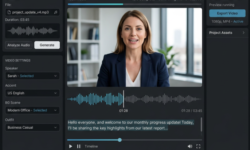
AI software screen showing audio input, voice selection, video preview, and progress bar

Artificial intelligence has brought in a huge change in video creation in recent years. What used to require professional editing software, animation skills and hours of work can now be done in minutes. Also the industry has seen the introduction of the latest audio to video AI which takes in voice recordings, podcasts, music tracks, and narration and turns them out into very presentable video content with very little input from the user. As of 2026 creators, marketers, educators, and startups are reporting that they are using AI for video production to scale their output. But not all platforms are created equal. Some do best with realistic avatars, others with animation, lip sync or image based video generation. After going over the leaders in this field I found that a few platforms really stand out. This guide compares the best audio to video AI generators at present, which were also evaluated for pros and cons and what works best for what.

Continue reading