How Can I Document a DIY Electrical Project So It’s Easy to Maintain Later?

The accomplishment of an electrical project done by yourself is a satisfying thing. You have saved money and acquired skills beneficial to you whether you have installed new lighting fixtures or have added outlets to your workshop or rewired a room. The point is, though, that such a feeling of achievement may be replaced very easily by a feeling of confusion six months or two years later when something will require correction or fixing. And when you stand there scratched as you are trying to recall where this or that wire was run or why you decided to do this or that, you are not alone. To avoid all future headaches, do not just do the quality job well today—documenting it helps for your understanding in the future about what was done and why. As you read along, I will tell you how to make sure your DIY electrical projects are easily maintainable till eternity.
Continue reading

What Trace Width Do I Need for My PCB Current, Temperature Rise, and Voltage Drop Goals?

You are not the only one to look at a PCB design and realize that you may not know whether your copper traces will be able to carry the current that you are about to pour into them. One of such essential issues of PCB design that can break or make your project is getting trace width right. Too thin and you can easily overheat, or even burn the traces. Too broad and you are both wasting real estate on the board and you are also risking a rise in manufacturing costs.

Continue reading

What’s the Difference Between a Wire Harness and a Cable Assembly (and When Does It Matter)?

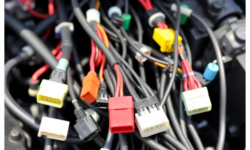
In case you have looked into an electronic gadget, taken off a car’s dashboard, or engaged in any kind of electrical work, you must have seen a mess of wires all packed together and arranged nicely. A question, however, which many find difficult to answer, comes next: is it a wire harness you are looking at or is it a cable assembly? And above all, is it really important to know what you are dealing with? The short answer is that, yes, it matters—particularly if you are designing products, placing component orders, or attempting to fix an electrical problem. Although these words are frequently used synonymously in informal talks, they denote separate things with different building ways, usages, and qualities. Grasping the differentiation may help you avoid wasting time, money, and a lot of frustrating experiences in the future.

Continue reading

How do you choose a PCB partner for European delivery without sacrificing speed or quality?

Locating the appropriate PCB manufacturing company to do business with in Europe is like searching a needle in a hay stack. You require a person who is aware of the urgency of your schedules, the accuracy required in your designs, and the logistical aspects of moving across the borders of Europe. The ill decision may result in late product release, quality failure, which entails costly re-work, and dissatisfied customers who are awaiting their orders. However, the good news is as follows: selecting the appropriate PCB supplier does not necessarily need to be daunting. Knowing what to expect and what questions to ask, you would have been able to find a manufacturing partner that would be a part of your team and not just a supplier in the supply chain.

Continue reading

How to Choose the Right PCB Manufacturer in Europe vs Asia for Your Next Prototype (Without Blowing Your Timeline)

When deciding to make a prototype PCB, one must know that the PCBs are indispensable for the continuance of your program schedule. Their timely presence would open doors for myriad corollary activities like firmware bring-up, system verification, enclosure fit checks… Well, in essence, your whole world comes crashing down if that signal of life doesn’t arrive in time. Obviously, the choice of PCB supplier is all about mitigating the risks of uncertainty, as the choice that narrows the risks of iteration also minimizes design modifications.

Continue reading

Essential Paperwork to Ship to a Supplier for Custom Harness Production

The process of having a custom harness manufactured often feels like the world’s most high-stakes pioneer game of the telephone game. You have a dream in your mind, technical specifications in paper, and a vendor who is willing to make it come true. However, the point is that, unless the documentation that you submit is absolutely crystal clear, you are preconditioning delays and expensive revisions as well as a significant share of frustration on both ends.

Continue reading

BMG LABTECH: Innovating the Future of Microplate Reading Technology

In the world of life sciences and biotechnology, accuracy and speed are everything. Whether measuring enzyme activity, analyzing DNA, monitoring cell growth, or screening thousands of compounds, laboratories rely heavily on advanced detection systems. Among the global leaders in this space, BMG LABTECH stands out as a company dedicated to precision, reliability, and innovation in microplate reader technology.

Continue reading

Human vs. Non-Human Genome Sequencing Services

DNA sequencing used to cost millions and take years. Now? A complete genome takes days. The machines read human genes, bacterial chromosomes, plant DNA, and animal genomes. Same technology. Different goals. Comparing Human and Non-Human Sequencing Offerings When your doctor orders whole-genome sequencing, they’re looking for answers. Maybe you have symptoms no one can explain. Maybe your cancer needs a treatment plan. WGS reads all 3 billion letters in your genetic code. It finds mutations that cause disease and guides medical decisions.

Continue reading

The Rise of Smart Grids – EDIBON’s Global Role in Industrial ‐ Engineering Education

In today’s rapidly evolving energy landscape, smart grids are no longer a futuristic ambition — they are a necessity. But what is a smart grid, exactly? It’s more than just wires and power stations: it’s an intelligent, interconnected energy system that uses advanced information and communications technologies to monitor, control, and optimize every step of electricity generation, transmission, and consumption. EDIBON, a leading global manufacturer of technical equipment for teaching industrial engineering, places smart grids at the heart of its mission, empowering students and professionals with hands-on, real-world systems.

Continue reading