




The concept of cryptography may seem like something reserved for spy films and secret services, but it is everywhere. Whenever your teen sends a text through his/her preferred application or buys anything online, cryptography is operating in the background to ensure that the information of their teenage lives is not compromised. The challenge? Getting this complicated information to sink in with teens who would far prefer scrolling their social media feeds than reading mathematical equations.

The upsides are that cryptography does not need to be like homework. An abstract concept can be made interesting and memorable when taken in the right direction. We shall see how games and real life examples can make cryptography not only approachable but literally irresistible.
Starting with the basics: Making codes feel real
Teens should be made aware of the importance of cryptography, before getting down to the complex algorithms used. Instead of lecturing about the importance of data security, you would question them with a simple question: What would happen in the case when anyone was able to read your private messages? Encryption is not only a theory anymore, but it is personal protection.
Begin by simply replacing ciphers such as the Caesar cipher which is a cipher in which every letter is moved forward or backward a fixed number of positions. Get them to send secret messages to friends and then they should be tested to break each others codes. This practical technique renders the idea of encryption realistic. Once they understand that it is time and effort required to crack a simple cipher, they will start to appreciate the existence of more complicated techniques.
To add a historical flavor, you may present the Atbash Cipher Tool, the ancient Hebrew cipher, in which the alphabet is inverted. Adolescents are fond of learning that cryptography was used in ancient societies, and this easy reversal method proves the idea that encryption is not a relatively new technology. Have them pact messages and test their speed at cracking the efforts of their friends and form an intuition of the strength of ciphers by firsthand experience.
Gamifying the Learning Process
Games turn the passive learning into the active problem-solving. A classroom or family cipher challenge: Teens will be asked to crack the codes in the shortest amount of time. Give speed and accuracy points and raise the challenge with introduction of new types of ciphers.
Another interesting opportunity is provided by digital escape rooms. Create the design situations in which teenagers will encounter the messages and need to decrypt them to obtain the next hint. Present the story as a story about something they care about, such as codes being discovered to a fictional celebrity account or solutions to codes to avoid a virtual heist. The book offers the encouragement and the puzzles give some cryptographic thinking.
Board games such as the cryptographic-themed Decrypto do not force the concepts of cryptography upon a person. Players provide coded communications to their team mates and attempt to intercept opponents communications, just like in the real world problems in cryptography. The competitive aspect maintains the interest level during this process and develops the ability to recognize patters and think logically.
Connecting Cryptography to Their Digital World
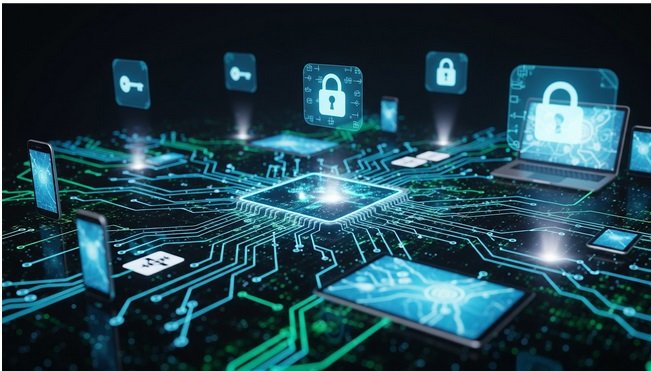
Teenagers are on-line and therefore associate cryptography with their online lives. Don’t simply describe the mathematics when they come to hear about public-key cryptography. Rather, demonstrate to them the small padlock character in their web browsers and tell them that it is the same type of technology that keeps their passwords, photos, and personal data safe in their browsers day in and day out.
Create interactive study resources using the Online Flashcard Maker and combine terms to do with cryptography and real-world uses. Rather than just dry definitions, put real world situations on each of the cards. As an example, one of the flashcards may contain the following question: Your friend sends you a message using WhatsApp. What kind of encryption is used to ensure that hackers do not read it? It is a contextual learning that causes the concepts to remain by relating to what is familiar.
Illustrate end-to-end encryptions by asking teens to exchange encrypted messages between one another using different applications and explaining why certain apps are more secure compared to others. Such a method of comparison shopping to security makes them think critically concerning the technology they utilize on a daily basis.
Making Hash Functions Memorable
The use of hash functions will not seem so complex when you put them in comparison to daily experiences. Ask your adolescent: “Should I make a smoothie, can I take it back to strawberries, bananas, and yogurt? This single-way transformation is the best example of how hash functions are designed, which transforms any input into a fixed size output that is impossible to reverse.
Go a step higher and develop physical demonstrations. Write messages on paper and crumble up to balls, and take pictures of each ball in the same angle. Various messages give various crumpled patterns, similarly various inputs give various hashes. The avalanche effect that makes hash functions so effective at data integrity is shown by small modifications in the original message producing radically different output.
Exploring Real-world Applications Creatively
The most effective learning sometimes occurs when the teenagers are not aware that they are learning. Take into account the ways in which such seemingly unrelated activities can shed some light on the principles of cryptography. The Megabonk Simulator may be regarded as pure entertainment, whereas games with information concealment, strategy, are similar to the skills demanded in cryptographic thinking, which is pattern recognition, strategy planning, and knowledge of how to keep information valued.
Even the most basic of tasks such as visiting a Restaurant Directory can turn into a climax in cryptography. Talk about reservation systems in restaurants keeping customer information secure, how the information stays safe when the customer orders online, and why it is important to verify users when dealing with restaurant reviews. These daily deals de-magic cryptography since they demonstrate its extensive usage in everyday living.
Building Toward Advanced Concepts
When the teens have understood the basics, then slowly bring up more complex concepts. Steganography, which is art of concealing information using pictures or other files, is interesting to the teenagers as they believe they are being actual spies. Allow them to play with tools that can put text inside the pictures, and then ask them to find the secret messages in pictures you give them.
Present the idea of cryptanalysis by asking them to solve different ciphers without the key. This hostile thinking results in stronger knowledge since they not only get to know how to safeguard information but also how it may be attacked by the hackers.
Conclusion: Gaming to Real Knowledge
There is no need to simplify to teach teens cryptography. It involves bringing abstract ideas to reality by making them concrete in the experiences that they can touch, observe and engage in. In encrypting messages to their friends and in cipher tests and deciphering cryptography keeping their own digital lives safe, they gain a real knowledge that is way beyond memorization.
This is not aimed at making all teenagers cryptographers. It is to develop digital literacy and critical thinking abilities that will stand them in their life. You can begin with games and daily examples, which can form a base of curiosity that may only turn the next generation of security professionals into inspiration.