




The accomplishment of an electrical project done by yourself is a satisfying thing. You have saved money and acquired skills beneficial to you whether you have installed new lighting fixtures or have added outlets to your workshop or rewired a room. The point is, though, that such a feeling of achievement may be replaced very easily by a feeling of confusion six months or two years later when something will require correction or fixing. And when you stand there scratched as you are trying to recall where this or that wire was run or why you decided to do this or that, you are not alone.
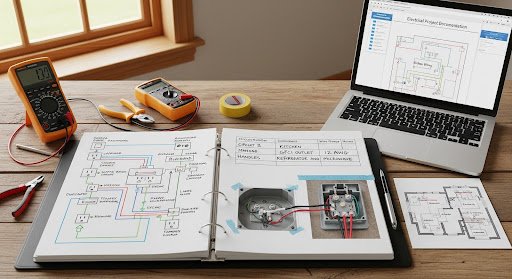
To avoid all future headaches, do not just do the quality job well today—documenting it helps for your understanding in the future about what was done and why. As you read along, I will tell you how to make sure your DIY electrical projects are easily maintainable till eternity.
Start with Clear Before and After Photos
When you are recording electrical work, photography is your friend. You should not even touch a wire before you take your smartphone and start taking photographs. Take a series of shots of the current arrangement in various angles, close-ups of connections, color of wires and their placement. Such reference photos may come in handy in case there is a need to troubleshoot in future.
After you come out of your work, take another set of photos, the comprehensive one. Record completed connections, routing of wires, location of junction boxes and any special mounting structures that you have designed. There is no such thing as having excessive photos, storage is inexpensive, and losing important information is expensive.
Create a Detailed Written Log
Where photos present the visual reality, a written log presents your line of thought and the information that may not be presented by photos. Prepare a document related to every electrical project with the date of the project, the specifications of locations where work was done, and a proper description of the work done or addition made.
Note the materials you used not only the wire gauge but also the cable types and brand and model numbers of switches, outlets, breakers, and fixtures. Above all, provide reasons as to why you chose to make decisions. The reason you used 12-gauge instead of 14-gauge was because you are going to expand later on? These background notes will come in handy in future.
In general, devices such as a Box Fill Calculator can be invaluable when it comes to setting up your electrical systems and making sure that you are operating within your legal capacity of the junction box when it comes to the number of wires and devices fitting. By documenting how calculations are performed, one creates a well-kept paper trail that establishes that the regulations have been adhered to.
Label Everything Clearly
Later you will be glad that present you are taking the time to label components in detail. Label your breakers in your electrical panel either with a label marker or permanent marker, making sure to specify what circuit they serve. Be precise- do not write bedroom, write master bedroom outlets and ceiling fan.
Marking of wires It is good practice to have wire markers within junction boxes in case you store more than one circuit within a box. In more complicated conduit installations, it is better to work with Free Conduit Fill Calculator in order to make sure that you are not overstuffing your conduit, and mentioning such calculations in your paperwork indicates that you have read up on the requirements of the NEC.
Draw a Basic Schematic or Diagram

You do not have to be an electrical engineer to come up with a useful diagram. A basic sketch with just a hand-drawn line indicating the flow of circuits, the position of junction boxes and how switches operate as to which fixtures can prove extremely useful. Be simple in symbols of common parts and label everything.
A simple floor plan of where all the electrical pieces are will do the trick in case of more complex projects. Trace cable routes and in particular those ones which are behind walls or inside ceilings. In case you are taking notes on other home projects that are visual, you can use such tools as an AI Background Remover to clean the pictures and make them easier to include in the documentation, should you wish to isolate certain parts of the image against confusing backgrounds.
Keep Track of Code Compliance
The documentation of whether your work is in compliance with electrical codes is one of the most crucial issues to document. Record the version of the National Electrical Code you had to work with and record any special code requirements that you fulfilled. The purpose of this documentation is twofold; it assists you to recall what standards you have used and as an evidence of conforming work in the event that you sell your home or undergo an inspection.
Store Your Documentation Strategically
Facing the challenge of making great documentation will not assist you when you need it. A three-ring binder with the label of Electrical Projects is a wonderful product in relation to the physical documents and printed photos. When using digital recordkeeping, establish a good folder system on your computer or cloud storage service and ensure that you back everything on a regular basis.
To create a visual image of a space that can be used to supplement your electrical documentation, a 3D Model Generator would help you create a visual image of your space in the future to either plan your future renovations or to explain your electrical layout to your contractors.
Make Your Documentation Accessible to Others
Always keep in mind that you may not be the one who requires this information. When you dispose of your home, good documents are an advantage since they demonstrate to the buyers that electrical work was done in consideration. Hiring an electrician to do the work in the future would make your documentation help them to know your system instantly and may help save on labor costs.
Wrapping Up Your Documentation Journey
Recording your home-built electrical projects may seem like an additional burden now, but it will be a debt that will make you gain every time you have to alter, fix, or add to your electrical system. A well-documented network makes a jumble of wires in your walls and turns it into an easy to manage system.
What are the current electrical projects that you are undertaking? Have you come up with any strategies of documentation that are especially effective to you? Post your experiences below–we would love to know what tricks you have used to keep your DIY electrical work in order and get it maintained!