




Video editing traditionally needed a mix of technical knowledge, creative judgment, and a genuinely serious chunk of time. Editors often have to review hours of footage, identify the useful scenes, arrange clips on a timeline, sync up audio, add captions, and adjust the final presentation for whatever platform it’s headed to. AI’s changing this process by helping creators handle some of these repetitive tasks through plain natural-language instructions instead.
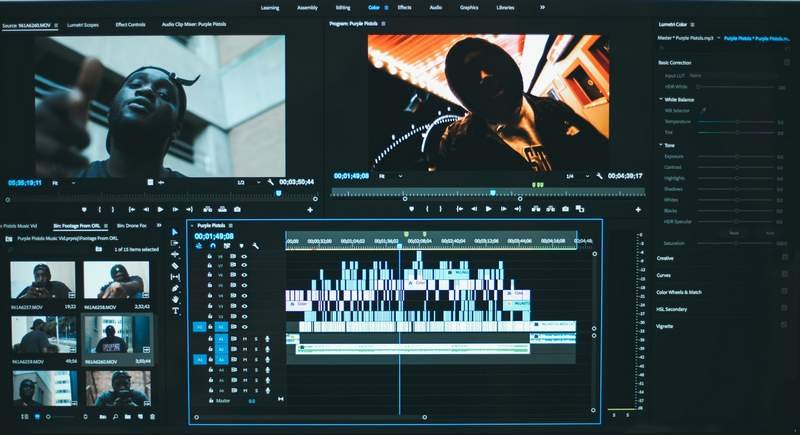
One of the genuinely more interesting developments here’s the rise of conversational video editing workflows. Instead of relying entirely on menus, buttons, and manual timeline adjustments, creators can just describe what they’re trying to achieve and let AI systems help organize the initial edit.
What Is an AI Video Editing Workflow, Exactly?
This is a video editing workflow built on AI. It uses machine learning and language-based instructions to assist with tasks that would normally require manual editing. A creator can upload several video clips and specify the order, length, pacing or important moments they want to be preserved.
The system can then analyze the available material and help put together an initial structure. That doesn’t necessarily mean AI’s making every creative decision, though. In a lot of cases, the real purpose is just reducing repetitive work and providing a starting point the editor can inspect and change from there.
Conversational systems make this whole process a lot more accessible, since users can communicate their intentions using ordinary language rather than learning every single function of professional editing software first.
How Chat-Based Editing Can Genuinely Help
A ChatGPT video editor workflow can link natural-language instructions with traditional video editing software. For example, a creator could upload a series of clips and tell the system to emphasize specific moments, order them in a certain way, and keep the video within a specific length.
AI is able to help interpret those instructions, and piece together the available footage into an editable rough cut. The editor will then go through the sequence, cut out any material that is not wanted, adjust the timing and make the real creative choices before delivering the final version.
This approach genuinely helps when the biggest challenge isn’t applying some effect but figuring out how to organize a huge pile of raw footage in the first place.
From Raw Footage to a Rough Cut
One of the more practical applications of AI here’s footage organization. A large project can have dozens or hundreds of clips, plenty of which will never actually appear in the final video. Reviewing all of it manually can eat up a genuinely significant amount of time.
AI-assisted systems can help identify potentially useful sections and cut out the obvious unwanted material from an initial sequence. The resulting rough cut isn’t necessarily a finished production, to be clear. It just acts as a foundation for further editing from there.
Keeping the draft editable matters a lot, since automated decisions don’t always match what the creator actually intended. A human editor can still adjust clip order, shorten scenes, replace footage, or change the overall rhythm however they see fit.
Natural Language and Creative Direction
Natural-language instructions can also change how beginners approach editing altogether. Traditional editing software often requires users to understand concepts like timelines, tracks, transitions, aspect ratios, and media organization before they can work efficiently at all.
Conversational instructions bring a whole new level of entry. Someone might say something like: “Make the opening faster,” “Highlight the interview,” or “The final video should be under a minute.” AI is able to comprehend directions like these and transform them into actual editing actions or suggestions.
That said, natural language should really be viewed as a communication layer, not a substitute for genuine creative knowledge. Understanding storytelling, pacing, composition, sound, and audience expectations still genuinely matters, no matter how good the language interface gets.
Captions and Multiple Formats
AI genuinely helps beyond basic clip selection too. Caption prep, language adaptation, and formatting for different platforms are all areas where automation cuts down on repetitive work considerably.
A single video, for instance, might need adapting into a vertical short, a square social post, and a traditional widescreen version, all from the same source. Each format can need changes to framing, text placement, duration, and pacing to actually work well.
AI can help prepare these variations, sure, but creators still need to check whether captions are accurate and whether important visual information’s gotten cropped or obscured along the way. Automated transcription can also slip up on names, technical terms, accents, or background speech pretty easily.
Why Human Review Still Genuinely Matters
Despite how fast AI-assisted editing’s improving, human oversight stays essential. An automated system might select a technically clear clip that lacks any real emotional weight, misunderstand the context of a conversation entirely, or create pacing that just feels off somehow.
There are also real questions around copyright, privacy, and how uploaded media actually gets handled. Creators should understand what happens to their files, what permissions are actually required, and which sources can legally get used in a production.
For professional or sensitive projects, these considerations can matter just as much as editing speed does, if not more.
Where AI-Assisted Video Production Is Probably Headed
The larger trend is the integration of conversational AI into existing creative software. Recent advances in the field show that AI assistants are increasingly being integrated into professional editing environments to assist with tasks such as organizing media, generating rough cuts, adjusting projects and automating repetitive operations.
This doesn’t mean traditional editing is necessarily going away, though. The role of the editor will likely morph gradually into directing, reviewing, refining and making those higher-level creative decisions that really matter.
While artificial intelligence can add speed and automation, people add context, taste, judgment and real storytelling ability.
Wrapping Up
AI-assisted video editing’s making the whole production process a lot more conversational and accessible. By letting creators describe their goals in natural language, modern workflows can help organize footage, prepare rough cuts, develop captions, and handle repetitive production tasks that used to eat up hours.
The most effective approach really isn’t treating AI as a replacement for editing expertise. It works better as an assistant that handles the time-consuming prep work while the creator stays responsible for the story and the final result. As these technologies keep developing, combining automated assistance with genuine human creative judgment is likely to become an increasingly common part of how video production actually works.